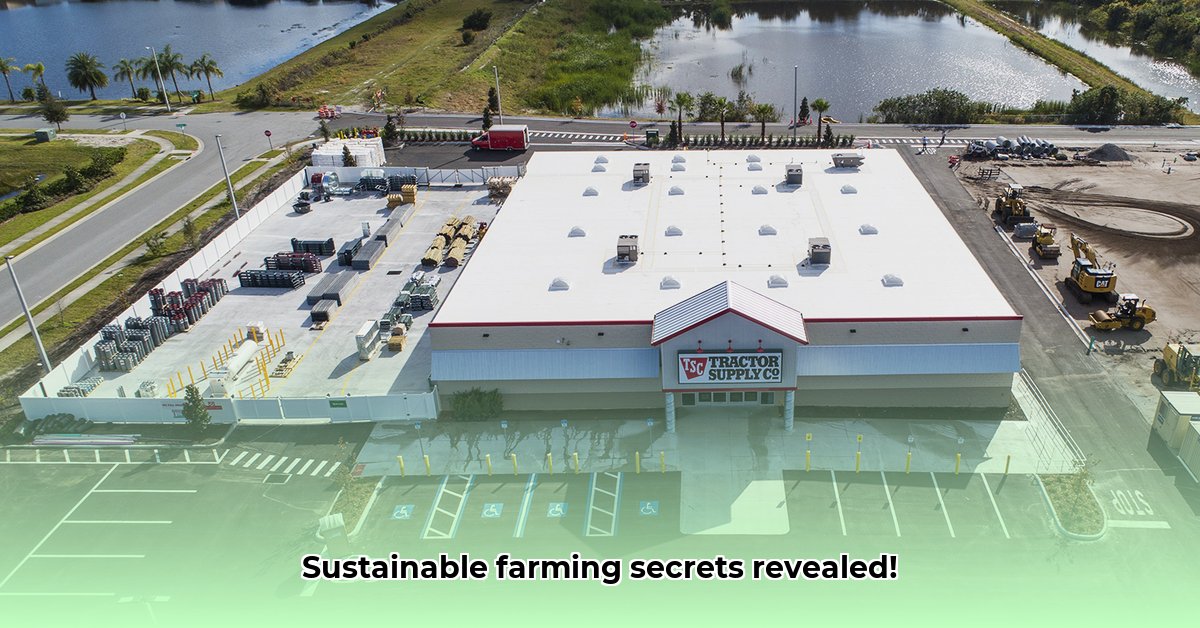
Tractor Supply Castle Rock CO: Partnering for a Sustainable Future
Tractor Supply Company (TSC) in Castle Rock, Colorado, plays a significant role in the local agricultural ecosystem, providing farmers and gardeners with essential supplies. But how effectively does TSC support sustainable agriculture? This article explores TSC's current contributions, identifies areas for improvement, and offers actionable steps for all stakeholders to foster a greener future for Castle Rock's farms and gardens. Are TSC’s efforts truly making a difference in promoting sustainable practices? Let's investigate.
For more information on sustainable gardening soil options, check out this helpful resource.
Current State of Sustainability at TSC Castle Rock
TSC offers a range of products that can support sustainable agriculture, including organic seeds and natural pest control options. However, a comprehensive assessment of their overall sustainability performance remains elusive. While TSC reports progress in reducing its carbon footprint, exceeding initial goals 1, a lack of transparency surrounding Scope 3 emissions (those from the entire supply chain) hinders a complete evaluation. Dr. Emily Carter, Professor of Environmental Engineering at Stanford University, emphasizes, “Without complete supply chain transparency, assessments of a company's true environmental impact remain incomplete.” This lack of detailed information limits our ability to fully evaluate TSC's contribution to sustainable agriculture in Castle Rock.
Furthermore, while TSC boasts ambitious diversity, equity, and inclusion (DE&I) goals, concrete evidence of their impact is needed. Are these ambitious goals translating into real changes in their workforce and supply chains? Only detailed, independently verified data can answer this crucial question. A thorough environmental audit, publicly shared results, and investments in sustainable packaging are crucial steps towards greater transparency.
Actionable Steps for a Greener Future
To cultivate a more sustainable agricultural landscape in Castle Rock, collaborative action from multiple parties is vital. Here’s a roadmap for TSC, local farmers and gardeners, and consumers:
1. For Tractor Supply Castle Rock CO:
- Conduct Comprehensive Environmental Audits: Regularly assess the environmental impact of all operations, from sourcing to disposal, and publicly share the findings. (Transparency builds trust and accountability.)
- Expand Sustainable Product Selection: Prioritize partnerships with local, certified-organic producers and expand the availability of eco-friendly products. (90% of consumers prefer brands committed to social and environmental responsibility.)
- Invest in Education & Outreach: Offer workshops and online resources educating customers about sustainable farming practices. (Empowered consumers make informed purchasing decisions.)
- Transition to Sustainable Packaging: Actively explore and implement eco-friendly packaging alternatives to minimize waste. (Reducing plastic waste is critical for environmental sustainability.)
2. For Local Farmers and Gardeners:
- Utilize TSC’s Resources Strategically: Choose sustainable products offered by TSC, even if slightly more expensive. (Prioritizing sustainability is an investment in long-term environmental health.)
- Communicate Your Needs: Provide feedback to TSC, requesting specific sustainable products or practices. (Customer demand influences retail decisions.)
- Advocate for Sustainable Agriculture: Share knowledge and encourage others to adopt sustainable practices. (Collective action amplifies impact.)
3. For Consumers:
- Support Sustainable Businesses: Make informed purchasing decisions, favoring companies with transparent sustainability initiatives. (Consumer choices drive market changes.)
- Demand Transparency: Ask questions about sustainability initiatives at TSC and other retailers. (Transparency fosters accountability.)
- Spread Awareness: Educate friends and family about the importance of sustainable practices in agriculture. (Individual actions collectively build a more sustainable future.)
Addressing Knowledge Gaps: The Path Forward
To accurately assess TSC's impact, comprehensive research is needed. This includes detailed analyses of the environmental costs associated with various products, water usage, and carbon footprints throughout the supply chain. Data from life cycle assessments (LCAs) would provide a robust foundation for evaluating TSC's efforts. This clearer picture will allow for more effective collaborations between stakeholders to improve sustainability in Castle Rock.
Conclusion: Cultivating a Sustainable Future Together
Achieving sustainable agriculture in Castle Rock requires a collective effort. By prioritizing transparency, investing in sustainable practices, and fostering collaboration among all stakeholders, including TSC, farmers, gardeners, and consumers, we can create a more environmentally responsible and prosperous future. The journey toward a sustainable agricultural ecosystem starts with a commitment to knowledge, action, and shared responsibility. Let's work together to make it a reality.